

Retinal conditions can be challenging because significant changes may occur without causing eye pain. The retina is the light-sensitive tissue at the back of the eye that converts incoming light into signals used by the brain to create vision. Problems affecting this delicate structure can influence central vision, peripheral vision or both.
Understanding when Retina Services may be needed is particularly important for people with diabetes, increasing age or unexplained visual changes.
Some retinal symptoms deserve particular attention:
A sudden increase in floaters
Flashes of light
A dark shadow in the visual field
A curtain-like effect across part of the vision
Straight lines appearing bent or distorted
Unexplained central blurring
Missing areas in the field of vision
Sudden reduction in eyesight
These symptoms can have different causes, and not every floater indicates serious retinal disease. However, a sudden onset or significant change should not simply be ignored while waiting to see whether it disappears.
Diabetes is another important reason to think about retinal health.
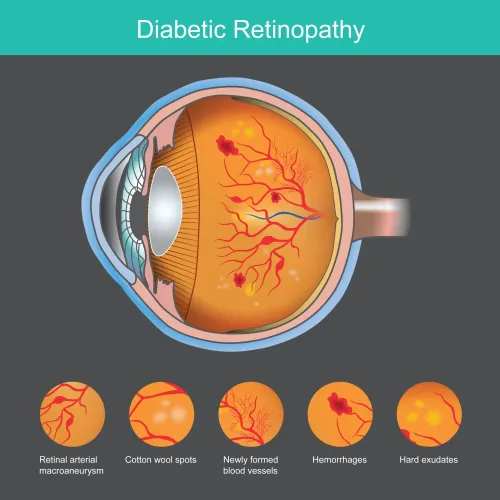
Diabetic retinopathy develops when diabetes affects blood vessels in the retina. One difficulty is that early retinal changes may occur before the patient notices a major difference in vision. A person may therefore feel that eyesight is satisfactory while retinal abnormalities are already present.
This is why retinal examination can be relevant even when someone with diabetes has no obvious visual complaint. The appropriate examination schedule depends on individual findings and medical circumstances.
Age-related retinal changes can also affect the macula, the central area responsible for detailed vision. Someone experiencing distortion while reading, difficulty recognising faces or changes in central vision should not automatically assume that new spectacles will solve the problem.
A retinal evaluation may involve a dilated eye examination. Depending on the findings, the ophthalmologist may recommend imaging or other diagnostic investigations to examine retinal structures in greater detail.
For people living around Bannerghatta Road in Bengaluru, Karnataka, access to retinal assessment is relevant not only after symptoms develop but also when medical risk factors are present. Akshara Eye Hospital includes Retina Services among the ophthalmic services available at its Bannerghatta Road facility.
One practical distinction is useful. Gradually changing spectacle power generally requires routine evaluation, while sudden flashes, numerous new floaters, a curtain-like shadow or sudden visual loss call for more prompt attention.
Retinal health should also be considered as part of broader eye care. Blurred vision does not always originate from the front of the eye. Cataracts, corneal problems, glaucoma and retinal conditions can produce different forms of visual difficulty.
A thorough examination helps identify where the problem originates before treatment decisions are made. When retinal symptoms appear, early assessment provides the information needed to determine whether monitoring, medical management, laser treatment, injections, surgery or another approach is clinically appropriate.