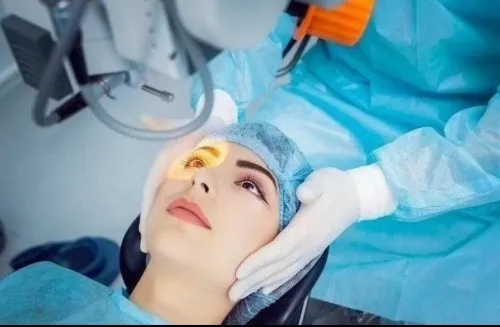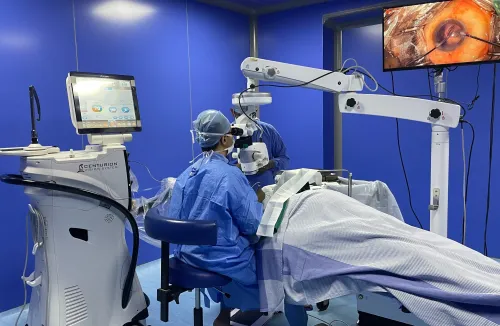

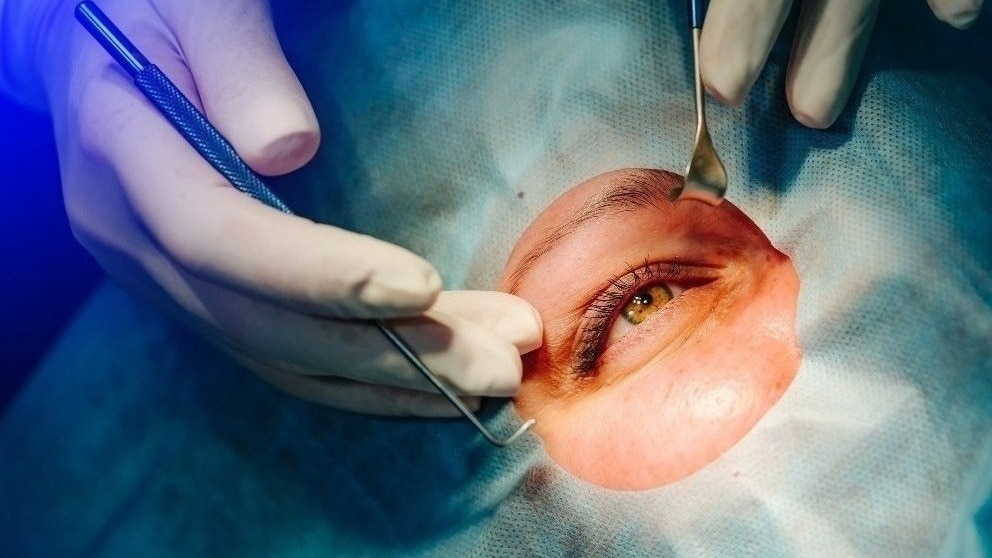
Cataract treatment does not end when the operation is over: your eye still needs checks for healing, pressure, inflammation, retinal health and visual clarity. Knowing what each follow-up visit examines, which symptoms need urgent attention and how to compare local providers will help you protect the result over the long term.
Key takeaways
- Attend scheduled checks to confirm healing and update your vision prescription.
- Seek urgent advice for severe pain, sudden vision loss, flashes, or new floaters.
- Ask how your specialist will monitor eye pressure, inflammation, and retinal health.
- Choose a clinic with examination, surgery, and ongoing follow-up services.
What happens during follow-up after cataract treatment?
Vision is not necessarily stable immediately after cataract treatment. Follow-up confirms that healing is on course, identifies complications early and shows when your glasses prescription or long-term monitoring needs updating.
- First-day review: The specialist checks visual acuity, eye pressure, the incision or wound, corneal clarity, inflammation and the position of the implanted intraocular lens. Use your prescribed eye drops exactly as directed, even if vision improves; stopping early can disrupt recovery.
- Early postoperative checks: During the next healing visits, the specialist reassesses pressure, inflammation, corneal recovery, lens position and retinal health. The schedule changes after complicated surgery or for conditions such as glaucoma, diabetes or corneal disease.
- Later eye examinations: Once the eye has settled, testing confirms your lasting vision and whether you need glasses. Continuing cataract care also includes surveillance for glaucoma, retinal disease and other problems unrelated to the original cataract treatment.
Mild blur, light sensitivity or discomfort can occur during recovery, but worsening vision, increasing pain, marked redness, flashes, a sudden increase in floaters or a curtain-like shadow needs urgent contact with an eye specialist. Long-term examinations remain important because removing a cloudy lens does not remove risks such as diabetic retinal disease or macular oedema.
The second eye is scheduled according to healing, visual balance, daily needs and ocular health, not simply a fixed calendar date.
Which recovery symptoms are normal, and which need urgent attention?
Mild discomfort, blurred vision and light sensitivity can occur during normal recovery, and vision may fluctuate rather than stabilise immediately. Use prescribed eye drops exactly as directed; stopping them because vision improves can allow inflammation or infection to worsen.
| Symptom | More consistent with routine recovery | Contact an eye professional urgently when |
|---|---|---|
| Blur or discomfort | Mild and gradually improving | Vision suddenly drops, or pain becomes severe or worse |
| Light sensitivity | Mild and settling with recovery | It becomes marked, especially with redness, pain or reduced vision |
| Redness or discharge | Mild irritation near the operated eye | Redness increases, discharge appears, or the eye becomes increasingly painful |
| Flashes or floaters | Not expected as a new symptom | New flashes, a sudden shower of floaters or a curtain-like shadow appears |
These warning signs can indicate infection or serious inflammation inside the eye, which needs prompt treatment. Flashes, a sudden increase in floaters or a curtain-like shadow can signal retinal detachment; do not wait for the next scheduled visit.
Call your cataract specialist or the listed emergency service immediately if you notice these changes. Continuing cataract care also matters when recovery feels comfortable: examinations can identify pressure problems, retinal disease or dry eye that causes persistent blur after the operation.
How does a cataract specialist manage risks beyond the operation?
Follow-up becomes more intensive when another eye condition could limit vision or raise the risk of complications. A cataract specialist sets the schedule around your eye findings, healing, medicines and the operation’s complexity rather than using a fixed calendar.
- Diabetes: Arrange dilated retinal examinations and optical coherence tomography (OCT) when vision remains blurred or diabetic macular oedema is a concern. Cataract surgery clears the lens but does not remove diabetic retinopathy, so retinal treatment and diabetes control remain separate priorities.
- Glaucoma: Measure intraocular pressure at early visits and during long-term examinations. Review pressure-lowering drops, optic-nerve appearance and visual-field results; a pressure spike after surgery needs prompt treatment.
- High myopia: Perform careful dilated peripheral-retina checks because lattice degeneration, retinal tears and detachment risk require attention beyond the new lens.
- Retinal disease: Compare OCT scans and visual acuity with preoperative findings. Age-related macular degeneration or an epiretinal membrane can restrict improvement even when the implant is clear.
- Corneal problems: Check corneal clarity, surface dryness, swelling and wound healing. Existing keratoconus, endothelial disease or severe dry eye can make refraction unstable and prolong visual recovery.
- Surgical complications: Add visits for persistent inflammation, raised pressure, wound leakage, implant displacement or cystoid macular oedema. The specialist may extend medicines, repeat imaging or refer for retinal or corneal treatment.
Choose cataract services that provide continuing access to the same or linked ophthalmology team. Lifelong examinations still matter after recovery because glaucoma, retinal disease and refractive changes can develop independently of the original surgery.
Why can vision change again after a successful cataract procedure?
A clear implant does not guarantee glasses-free vision. Cataract treatment replaces the cloudy natural lens, but astigmatism, presbyopia or residual refractive error can remain. You may still need reading or distance glasses, and the prescription is best measured after the eye has substantially healed.
Blur that returns later needs a fresh assessment rather than an automatic assumption that the cataract has returned. A specialist typically proceeds as follows:
- Measure refraction and visual acuity to determine whether glasses could restore sharpness. An unstable tear film can make these measurements unreliable.
- Examine the ocular surface for dry eye. Lubricating drops, eyelid treatment or other prescribed therapy can improve tear stability and visual quality.
- Inspect the cornea, intraocular lens and posterior capsule. Posterior capsule opacification can appear weeks, months or years later; it is not a new cataract. If it interferes with vision, a YAG laser capsulotomy can usually clear the capsule.
- Check eye pressure and examine the retina, especially when diabetes, glaucoma or high myopia raises the risk of another cause. Diabetic retinopathy or diabetic macular oedema needs separate retinal treatment.
Long-term cataract care still includes eye examinations for glaucoma, retinal disease and changing refraction. Use prescribed postoperative drops exactly as directed; stopping them when vision improves can allow inflammation or surface problems to persist.
How should you choose a cataract specialist for continuing care in Bannerghatta Road?
One of the cataract specialist benefits in Bannerghatta Road is practical continuity: you can return to the same or linked ophthalmology team for recovery checks, glasses adjustments, complications and posterior capsule opacification. Location alone does not prove quality.
Ask Akshara Eye Hospital, or any local provider, who will review you after surgery and how your records follow you between clinicians.
| Question to ask | What a strong answer covers | Why it matters |
|---|---|---|
| Who provides follow-up? | Named surgeon or ophthalmology team, documented visits and a contact number | Prevents gaps when recovery is slower than expected |
| Which equipment is available? | Slit lamp, eye-pressure measurement, dilated retinal examination, and OCT when the macula or optic nerve needs assessment | Finds inflammation, pressure changes, retinal disease and other causes of poor vision |
| What happens after hours? | A direct urgent number, emergency assessment, and a defined hospital or retinal referral pathway | Delays can worsen infection, retinal detachment or severe inflammation |
| How will you decide on the second eye? | Review of healing, vision imbalance, daily needs, other eye disease and surgical risk | The calendar alone should not determine timing |
| Can I return years later? | Access to eye-pressure checks, retinal reviews, dry-eye care, glasses refinement and YAG laser assessment if needed | Cataract treatment does not replace lifelong eye care |
Also ask what vision the lens choice is intended to deliver, whether glasses remain likely, and how glare or halos from a multifocal lens would be managed. Clear answers make cataract services easier to compare.
Related services
Surgery Cataract surgery is removal of the cataract which forms due to age and earlier in diabetic patients and implantation of an intra-ocular lens(IOL). View service → |
Cataract Services Akshara Eye Hospital in Bangalore offers advanced cataract services to help restore clear vision for individuals suffering from cataracts. View service → |
Frequently asked questions
What happens during follow-up after cataract treatment?
Your specialist checks vision, eye pressure, the cornea, incision, inflammation, implanted lens position, and retinal health. They also review eye drops and decide when to update glasses.
Which recovery symptoms are normal, and which need urgent attention?
Mild blur, watering, light sensitivity, grittiness, and fluctuating vision can occur during healing. Seek urgent attention for severe or increasing pain, sudden vision loss, marked redness, flashes, a sudden increase in floaters, or a curtain-like shadow.
How does a cataract specialist manage risks beyond the operation?
They track healing, eye pressure, inflammation, retinal changes, infection signs, and conditions such as glaucoma or diabetic eye disease. They also adjust medicines and arrange referral or treatment when findings require it.
Why can vision change again after a successful cataract procedure?
Vision can change because of a glasses prescription shift, posterior capsule opacification, dry eye, retinal disease, glaucoma, or other eye conditions. An examination identifies the cause before treatment is chosen.
How should you choose a cataract specialist for continuing care in Bannerghatta Road?
Check whether the clinic provides postoperative examinations, eye-pressure measurement, retinal assessment, medication review, and access to treatment for complications. Confirm how to contact the team for urgent symptoms and how records are shared.