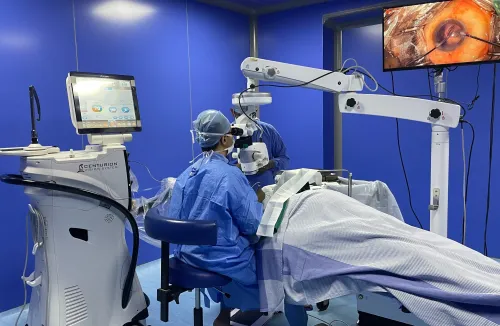

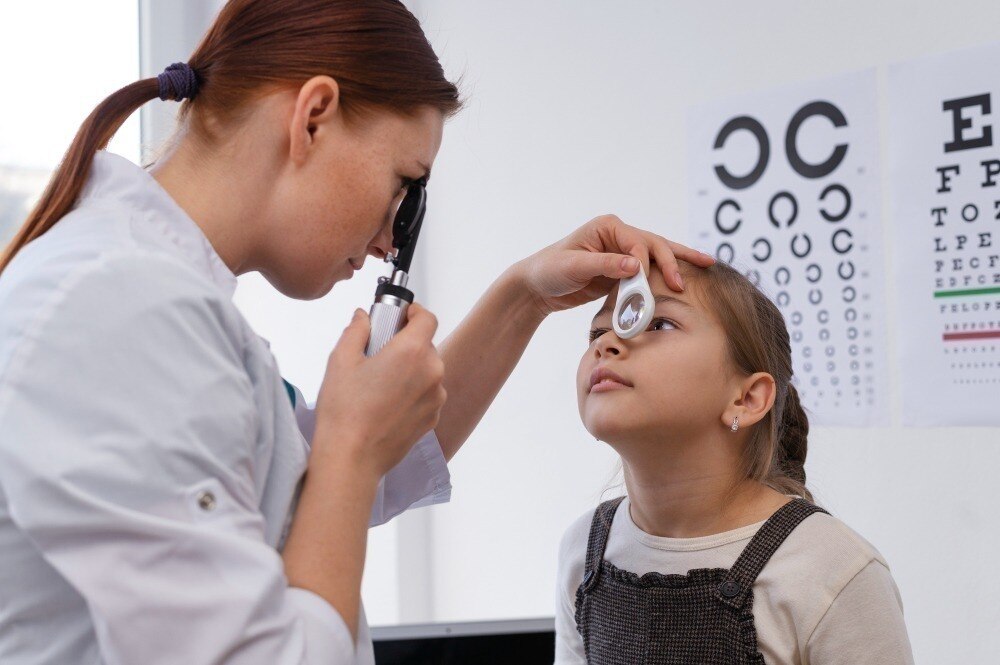
A first eye appointment for a child involves more than reading letters from a chart. The specialist combines your child’s history, visual behaviour, age-appropriate vision tests, eye-alignment checks and, when needed, dilated examination to find problems that children may not describe themselves.
Key takeaways
- Share birth history, development, school concerns and symptoms at registration.
- Pictures, matching games and symbols test vision when children cannot read letters.
- Eye drops may be needed to measure focusing power accurately.
- Before leaving, confirm the diagnosis, prescription, follow-up date and warning signs.
What happens when your child arrives for the first appointment?
1. Registration starts the visit, followed by a parent or caregiver history. Tell the specialist about premature or complicated birth, developmental milestones, school performance, headaches, squinting, eye rubbing, closing one eye, an unusual head posture, and difficulty with near work.
Mention family history of childhood squint or serious eye disease, previous glasses, patching, other treatment and screening results.
2. Before formal testing, the clinician watches how your child uses vision. They look for fixation on faces or toys, following movement, accurate reaching, head turning, avoidance of one eye and struggle with close tasks. This behaviour helps select suitable tests, especially when a child cannot speak or read.
3. Testing is adapted to cooperation, age and symptoms. An infant may have fixation, following and objective measurements; a preschooler may use pictures, symbols or matching cards; a school-age child may read a chart with each eye tested separately. The specialist also checks alignment, eye movement and focusing, with cycloplegic refraction or dilation when indicated.
A child eye specialist first visit near Bannerghatta Road can therefore follow a different path for each child.
4. Before discharge, ask for the findings, treatment plan and follow-up date. Bring previous reports, current glasses, treatment details and a written list of symptoms. That preparation helps make a child eye specialist first visit near Bannerghatta Road more efficient and prevents important history from being missed.
How is vision tested when a child cannot read letters?
Infants do not need to name pictures to have useful vision testing. During an eye specialist for kids first examination, the clinician watches fixation and following, observes each eye separately, and may use preferential-looking cards with stripes or patterns to see which image the child notices.
| Age | Test | What it helps assess |
|---|---|---|
| Infants | Fixation, following, eye-by-eye observation and preferential-looking cards | Reduced vision in one eye or possible amblyopia |
| Toddlers and preschool children | Picture charts, symbol charts, or matching tests using cards | Myopia, hyperopia, astigmatism and unequal vision |
| Older children | Letter charts, with each eye tested separately when possible | Visual acuity and differences between the eyes |
A toddler may point to a picture, match a symbol to a card or identify a shape without reading letters. If a child cannot speak, name pictures or cooperate with a conventional chart, objective measurements still provide valuable information about refractive error and visual development.
These tests help identify reduced vision in one eye, unequal glasses power, myopia, hyperopia, astigmatism, focusing difficulty and possible amblyopia. A normal-looking eye does not rule out blur or unequal vision.
An autorefractor reading alone does not replace the specialist’s examination. When the clinician needs the child’s true prescription, cycloplegic refraction relaxes focusing and measures hidden long-sightedness or other refractive error more accurately.
How does the specialist check eye alignment and movement?
The clinician checks whether both eyes point together and move normally. A corneal light-reflex test directs a light toward the eyes, then compares the reflection’s position on each cornea. Unequal reflections can suggest a squint, even when the eyes look straight in a photograph.
The cover tests separate constant from hidden misalignment:
- In the cover-uncover test, covering one eye reveals a manifest deviation if the uncovered eye moves to take up fixation.
- In the alternate-cover test, switching the cover between eyes breaks binocular fusion and exposes a latent or intermittent misalignment.
- The child tracks a moving target up, down and side to side while the clinician checks whether both eyes move together through each direction.
- The clinician asks whether the child closes one eye, tilts the head, turns the face or reports diplopia, meaning double vision.
These observations can identify restricted eye movement or intermittent strabismus that a still image misses. During a child eye specialist consultation in Bannerghatta Road, the specialist also considers whether unequal refractive error or a poorly seeing eye has contributed to amblyopia.
Alignment and visual development must be assessed together because a child can have reduced vision even when the eyes appear healthy.
Why might the child need drops and a dilated eye examination?
Cycloplegic drops temporarily relax the child’s focusing muscle, so the specialist can measure refractive error without the child’s focusing effort changing the result. This can reveal hidden long-sightedness that a non-dilated prescription or autorefractor reading misses.
The drops take time to work; timing depends on the child, the examination purpose and the products selected by the doctor.
After dilation, near vision may remain blurred and bright light may feel uncomfortable for several hours. Bring sunglasses and supervise close work, and do not mistake temporary post-drop blur for a new prescription.
The internal and external examination may include:
- Pupils and the red-reflex response
- Eyelids
- Cornea
- Conjunctiva
- Iris
- Lens
- Optic nerve
- Retina
- Macula
An asymmetric, very dim or white red reflex needs prompt medical assessment; do not dismiss it as a camera-flash effect. The finding can point to an opacity, retinal disease or another serious condition.
The plan depends on what the examination shows. It may involve spectacles, observation, surface-disease treatment, or patching or atropine treatment for amblyopia. The specialist may also arrange imaging, refer the child to another service, or discuss surgery for selected eye, eyelid, cataract or alignment conditions.
What should you confirm before booking and before leaving?
Before booking, confirm that the clinic examines infants and children who cannot read letters. A pediatric ophthalmology appointment in Bannerghatta Road should match your child’s age and suspected problem, not just the earliest convenient slot.
1. Ask whether the clinician tests each eye separately, checks alignment and eye movements, and offers cycloplegic refraction when indicated. Confirm that dilation and an internal-eye examination can be completed during the same visit.
2. Bring previous reports, glasses, screening results and details of patching, drops or other treatment. Tell the specialist about the symptom that prompted the appointment.
3. Before leaving, request the measured vision for each eye and a written glasses prescription if one is issued. Ask whether amblyopia or strabismus was found, and what each finding means for treatment.
4. Record whether dilating drops caused temporary blurred near vision or light sensitivity. Get the treatment schedule, warning signs and the exact follow-up date rather than relying on a later message.
5. For families considering Akshara Eye Hospital, ask whether the appointment provides this age-adapted assessment and a clear plan in one visit. That question matters more than choosing a child eye specialist consultation in Bannerghatta Road based only on location.
Do not wait for a routine slot if your child has a white pupil, sudden vision loss, severe eye pain, new persistent double vision or a rapidly worsening eye turn. Seek urgent eye assessment instead.
Frequently asked questions
What happens when your child arrives for the first appointment?
Registration comes first, followed by a parent or caregiver history. Tell the specialist about premature or complicated birth, developmental milestones, school performance, headaches, squinting, eye rubbing, closing one eye, unusual head posture and difficulty with near work.
How is vision tested when a child cannot read letters?
The specialist can use age-appropriate methods such as pictures, matching cards, shapes or symbols. The child identifies or matches what they see instead of reading an alphabet chart.
How does the specialist check eye alignment and movement?
The specialist observes how both eyes move together and checks whether one eye turns in, out, up or down. Cover testing and tracking a target help reveal alignment problems.
Why might the child need drops and a dilated eye examination?
Drops temporarily relax focusing and widen the pupils. This helps the specialist measure the child’s prescription accurately and examine internal eye structures.
What should you confirm before booking and before leaving?
Before booking, confirm the clinician’s pediatric experience, appointment duration, drop policy and documents to bring. Before leaving, confirm findings, prescription instructions, follow-up timing and symptoms requiring earlier review.