
Families choosing eye care for a child must first separate a quick screening or glasses check from a full examination for vision development, eye disease and alignment. By the end, you can match the child’s age, symptoms and likely treatment needs to the right professional and compare nearby services by the tests, follow-up and emergency support they provide.
Key takeaways
- Use a pediatric ophthalmologist for eye disease, misalignment or surgery questions.
- Arrange an eye exam for persistent squinting, headaches, poor school performance or unequal pupils.
- A complete exam can include vision testing, eye alignment checks and dilated retinal examination.
- Compare local clinics by pediatric expertise, equipment, urgent access and follow-up continuity.
Which child eye-care professional fits the problem?
A school screening is a filter, not a diagnosis. Choose among these children eye care options according to the question you need answered:
| Option | Best suited for | Limits or escalation |
|---|---|---|
| School screening | Routine vision checks and identifying children who need referral | A failed result needs a proper eye examination; a normal result does not rule out unequal vision, amblyopia or disease |
| Pediatrician | General health, developmental concerns and initial review of symptoms | Refer for reduced vision, eye disease, squint, abnormal pupils or persistent visual complaints |
| Optometrist | Refraction, glasses and routine vision care | Cannot replace an ophthalmic examination when disease, injury or surgery is suspected |
| General ophthalmologist | Eye disease, injury and comprehensive assessment | May refer complex childhood squint, amblyopia or congenital conditions |
| Pediatric ophthalmologist | Reduced vision, squint, amblyopia, childhood eye disease and possible operations | Choose this specialist when visual development or alignment is central to the problem |
A child who fails screening does not automatically need glasses, but does need follow-up. Screening can miss unequal vision when both eyes are tested together, and a normal result cannot exclude every eye condition.
Use an ophthalmologist for crossing that persists after about 3–4 months, a new eye turn, double vision, abnormal head posture or limited eye movement. Do not rely on repeated spectacle-shop testing; misalignment can come and go, so bring dated photographs or videos.
For families seeking a child eye specialist nearby, travel time matters when repeated measurements or surgery may follow.
When should your child be checked, and which signs change the choice?
Routine checks are age-based; symptoms override the calendar. Use this schedule as a practical guide, then book a symptom-led examination sooner if anything looks abnormal.
| Age | Routine check | Book sooner when |
|---|---|---|
| Newborns | Examination before discharge, including red-reflex assessment; repeat promptly if the reflex is absent or abnormal. | A white or yellow-white pupil, drooping eyelid, unequal pupils or an eye that does not move normally appears. |
| Toddlers | Check around 6 months and again at 1–3 years, especially with premature birth, developmental delay or a family history of eye disease. | The eye turns in or out, the child closes one eye, squints frequently or holds objects very close. |
| Preschool children | Check at about 3 years and before starting school; test each eye separately, not only both together. | There is an abnormal head posture, difficulty seeing, or a persistent eye turn. |
| School-age children | Recheck every 1–2 years, and after a failed school screening. | Reading headaches, poor school performance, screen-proximity habits or suspected reduced vision develop. |
| Teenagers | Recheck every 1–2 years, particularly with increasing screen use, myopia or contact-lens plans. | Vision changes suddenly, becomes unequal or interferes with study, sport or driving preparation. |
For pediatric vision care in Bannerghatta Road, frequent squinting, closing one eye, sitting close to screens, reading headaches and poor school performance justify a full assessment. A child eye specialist nearby is preferable for persistent misalignment, reduced vision or abnormal head posture; bring dated photographs if the eye turn comes and goes.
Seek same-day care for chemical exposure, penetrating injury, severe pain, sudden vision loss, marked swelling, or a red painful eye with light sensitivity. A white or yellow-white pupil, missing red reflex or reduced vision is a referral red flag—not something to watch or treat with leftover eye drops.
What happens in a complete pediatric eye examination?
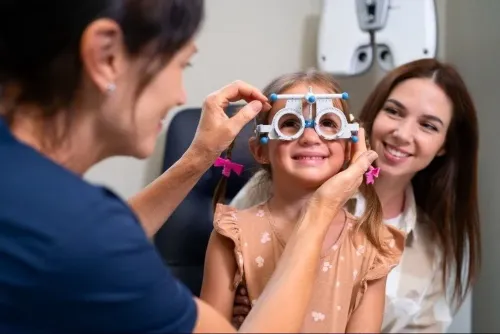
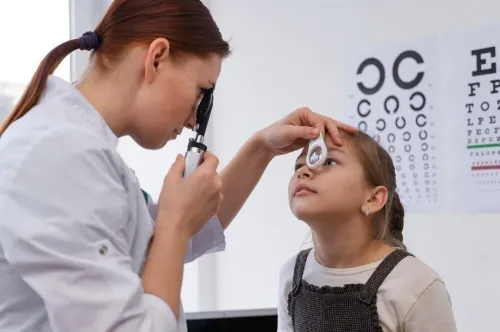
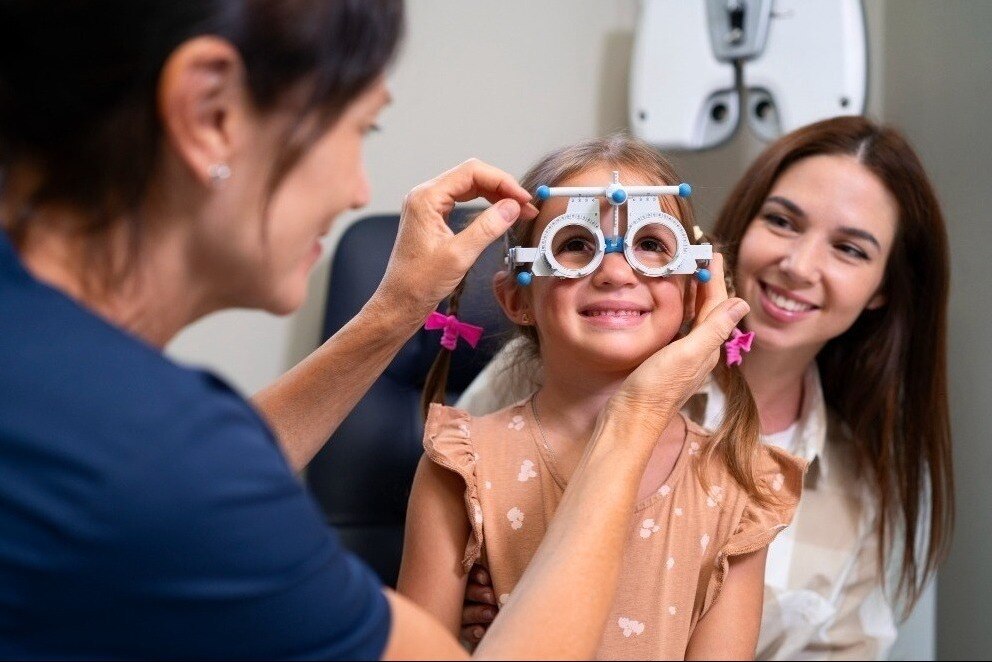
A complete examination tests each eye separately, checks how the eyes work together, and looks for disease that a quick screening can miss. A pediatric ophthalmology comparison should focus on these steps, not just the minutes spent reading letters.
1. The clinician uses age-appropriate targets: pictures, matching symbols, letters or fixation behaviour. Each eye is covered in turn, because a child can see normally with both eyes while one eye remains weaker.
2. Alignment and eye movements are checked with cover tests and tracking. The clinician also assesses pupil responses, the red reflex, the cornea, conjunctiva, eyelids and other anterior-segment structures.
3. Depth perception and colour vision are tested when the child’s age and cooperation make the results meaningful. Focusing is assessed because excessive accommodation can disguise the true prescription.
4. Cycloplegic refraction uses dilating drops to temporarily relax active focusing. Without this relaxation, the result can underestimate long-sightedness or produce an incorrect prescription. The clinician then decides whether a dilated fundus examination is needed to inspect the retina and optic nerve.
5. Before the appointment, ask how long the drops will blur near vision and cause light sensitivity. Plan transport and adult supervision if your child cannot read, walk safely or tolerate bright light afterward; sunglasses can improve comfort. For pediatric vision care in Bannerghatta Road, confirm the expected duration and post-drop precautions before booking.
How can Bannerghatta Road families compare nearby services?
Distance is only one part of comparing pediatric vision care options for local families in Bannerghatta Road. Check whether the service can provide:
- Child-sized equipment and age-appropriate visual-acuity testing.
- Cycloplegic refraction, not only a quick spectacle reading.
- Dilation and a retinal examination when indicated.
- Orthoptic or binocular-vision assessment for squint, double vision or poor depth perception.
- Retinal imaging when examination findings require a closer look.
- Follow-up with the same clinician and a defined referral route for surgery or retinal disease.
| Option | Best fit | Confirm before booking |
|---|---|---|
| Pediatric ophthalmology service | Amblyopia, squint, abnormal visual development or suspected disease | Specialist assessment, repeated measurements and referral access |
| General eye department | Routine eye disease or an initial hospital assessment | Whether complex childhood cases stay with one clinician |
| Optometry service or screening | Basic vision checks and straightforward refraction | How failed results are referred for a full eye examination |
Travel time matters because amblyopia, squint and myopia often need repeated measurements, prescription changes and review of treatment response. A slightly farther service is more practical if it offers reliable follow-up and continuity.
When conducting a pediatric ophthalmology comparison, families can ask Akshara Eye Hospital directly about these capabilities, follow-up arrangements and referral access, then compare the answers with the child’s actual needs.
Related services
Paediatric Ophthalmology Akshara Eye Hospital in Bangalore offers specialized Pediatric Ophthalmology Services to address a wide range of eye conditions in children. View service → |
Optometry Services Optometry Services in Bannerghatta Road Bangalore At Akshara Eye Hospital, our optometry services are designed to provide comprehensive eye care for... View service → |
How do diagnosis, treatment and follow-up affect the best choice?
Amblyopia treatment targets its cause, not just blurred vision. Unequal prescription may need spectacles; persistent misalignment may need alignment treatment; cataract or eyelid droop may require surgery or removal of the obstruction. Patching the better-seeing eye or atropine penalization can strengthen the weaker eye.
Earlier treatment offers stronger visual-development potential, but older children can still benefit.
Myopia management is different from prescribing stronger glasses after every prescription change. Discuss outdoor time, selected multifocal or myopia-control contact lenses, orthokeratology and low-dose atropine with a clinician. Contact lenses and orthokeratology require strict hygiene because corneal infection is a possible consequence of poor cleaning or wear.
Use this checklist when making a pediatric ophthalmology comparison among local children eye care options:
- Choose a service that measures progress repeatedly when treating amblyopia, squint or myopia; a nearby clinic is less useful if follow-up measurements are inconsistent.
- Confirm whether contact-lens fitting includes hygiene instruction, wear limits and review appointments.
- Ask whether cataract surgery, strabismus surgery, examination under anaesthesia or retinal treatment is available through a tertiary hospital referral.
- Before surgery, confirm pediatric anaesthesia support, pre-anaesthesia review, postoperative monitoring and repeat follow-up dates.
- Prefer a service with continuity of clinician and a clear referral route when a routine glasses visit could reveal congenital disease, cataract or retinal problems.
A farther specialist may be the better choice when it provides safer treatment and dependable follow-up rather than a single prescription.
Frequently asked questions
Which child eye-care professional fits the problem?
An optometrist can assess vision and prescribe glasses, while a pediatric ophthalmologist evaluates eye disease, misalignment, amblyopia and surgical needs. Choose based on the question your child needs answered.
When should your child have an eye examination?
Arrange an examination when your child has persistent squinting, headaches, reading difficulty, poor school performance, eye rubbing, unequal pupils or a visible eye turn. Do not treat a school screening as a diagnosis.
What happens during a complete pediatric eye examination?
The visit can include a history, age-appropriate vision testing, eye alignment and movement checks, pupil assessment, focusing tests and a dilated examination of the retina when clinically needed.
How can Bannerghatta Road families compare nearby child eye-care services?
Compare pediatric experience, diagnostic equipment, access to specialist treatment or surgery, appointment timing, emergency guidance, travel time and whether the same team manages follow-up.
How do diagnosis, treatment and follow-up affect the best choice?
Choose a service that can complete the required diagnosis and provide the treatment and review schedule your child needs. Complex conditions require coordinated specialist care and dependable follow-up.